A brief history
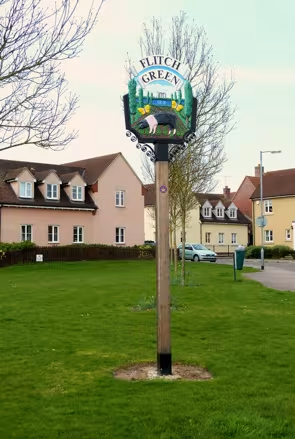
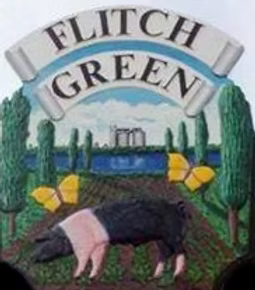
Flitch Green officially became a Parish entity in April 2009 and was known before that as Oakwood Park. Flitch Green is built on the site of a disused sugar beat factory which was demolished in 1999. The factory was originally built in 1926 alongside many others in East Anglia to combat sugar shortages arising from WWI. It was the last remaining sugar beat factory in Essex and was once a major employer in the region.
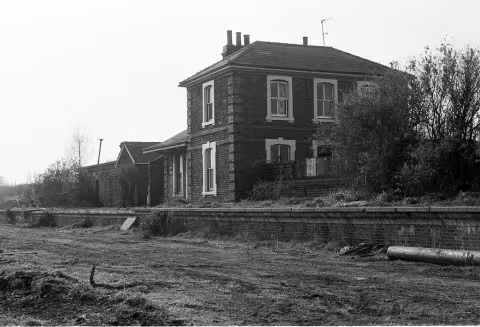
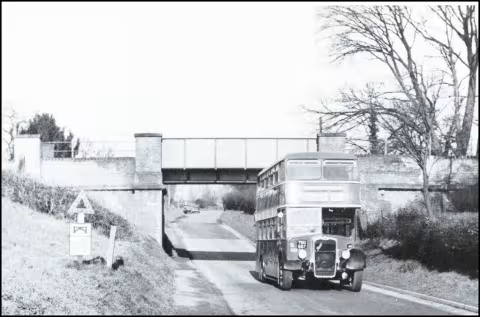
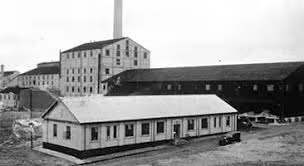
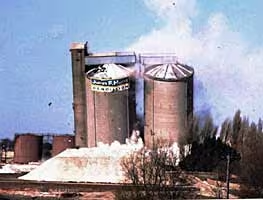
There was also a station (Felsted station) adjacent to the sugar beat factory, which was part of the old Bishops Stortford to Braintree branch line which was closed in the 1960s. The station building still exists today as a residential property and the line path is now part of the Flitch Way country park (see later).
Building work started on Oakwood park in 2001 and the first residents moved in at the end of that year. The village was built in phases and the final properties were completed in April 2018.
The battle for facilities within Flitch Green
In the early stages of its life as a village, there were many battles between the developers, the district council and the local parishes. It’s fair to say that neither Felsted or Little Dunmow villages were in favour of Flitch Green being built.
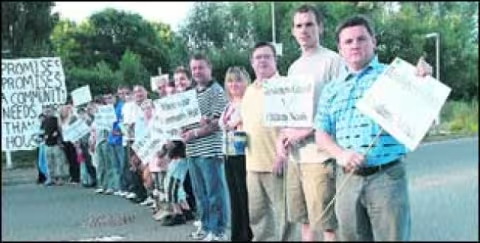
By far the biggest battle was between the residents of Flitch Green (then Oakwood Park), the developers and the District Council, over community facilities that were promised to residents when they originally bought their houses. Residents were promised shops, schools, medical facilities, equipped play areas and a community centre. According to the planning consent, all of these were supposed to be in place before the 501st home was occupied.
Unfortunately the developers exploited a loop-hole which meant that Uttlesford District Council were unable to enforce this until a dispute over another planning application in the area had been resolved.
The battle continued for many years and the residents became more determined to succeed at every step. Campaign action even included a roadblock preventing developers from working on the site (pictured left).
A group of residents formed the Oakwood Park Residents Association (OPRA) to continue the battles, and many of its members were then elected as Little Dunmow Parish Councillors (Oakwood Park was originally part of the Little Dunmow Parish).
Eventually the residents succeeded and the remaining facilities were developed, all of which are very much enjoyed by the community today. Nearly all of the people that made that happen are still active members of our community and some of them are current serving Parish Councillors.
Formation of the Flitch Green Parish and Council
Recognising that the residents of Oakwood Park would be best served by their own Parish Council, Uttlesford District Council granted an order for the creation of the Flitch Green Parish, which came into being on the 1st of April 2009 with a new Parish Council and 9 Councillor seats.
Flitch Green is one of the newest and smallest parishes in Essex. The name Flitch Green was chosen by the majority of people who expressed a view during the review. It commemorates the association of the area with the famous Flitch Trials which can be traced back for several hundred years, and are still celebrated today.
Parish Councils often carry the stigma of being run by old people with nothing better to do, but this is certainly not the case with FGPC. Our community has a high family demographic and our Councillors represent a broad range of ages and professions. The current serving councillors also reflect the spirit of the Flitch Green community, each being passionate about where they live, willing to offer a healthy challenge when debating issues, and keen to make sure that the community remains a great place to live for everyone.